About
Specification:
- Digital height readout and control panel
- Independent motor control
- Digital encoder depth control
- Disc brake for emergency stop
- Limit switches Top/Bottom
- Pneumatic belt tracking and tensioning
- Amp/load meter
- 5" dust ports
- Built in air filter/lubricator
- Maximum board dimensions: 24/36/43/53"
- W x 4.7" H
- Minimum board thickness: 3/16"
- Minimum board length: 10"
- Air requirement: 57 – 70 PSI, 12.3 CFM
- Option: touch screen controller
- Drum: Sanding belt speed display
- Overload display
- Conveyor speed display
- Digital control table movement, Precision 0.01mm
- Conveyor speed control by inverter (Option)
Feature:
- Roller type: Drum or Pad and Cutter head
- Working heads: 1~4
- Rubber roller: Diameter: 220mm (Spiral-Grooved Rubber)
- Pad roller: Diameter: 125mm (Spiral-Grooved Rubber)
- Motor brand: Fukuta (Supplier of Tesla)
- Conveyor Feed by worm gear speed reducer or Inverter(Option)
- Conveyor Speeds: 4~18 m/m
- Table Movement Motor: 0.25HP
- Size of sanding belt: 24”x 75”/36”x75”/43”x75” /53”x75”
- Drum: micro-adjustable, Ex-centre Roll: +-4mm
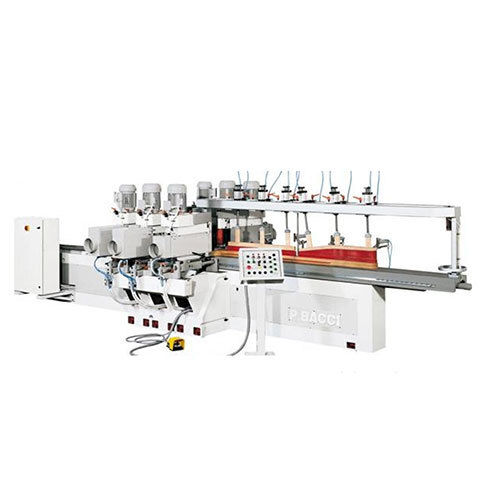
Versatile Surface SandingThis Wide Belt Sander machine efficiently handles a variety of wood-based materials, including MDF, plywood, veneer, and solid wood. Available in multiple widths to suit diverse workshop requirements, its sturdy build ensures both precision and longevity. The machine is engineered to deliver consistent surface finishing results whether processing panels for furniture or architectural applications.
Safety and Control FeaturesOperators benefit from integrated safety mechanisms such as emergency stop switches and overload protection, minimizing operational risks. The digital control panel offers intuitive management of sanding parameters and feeding speed adjustments. The noise level stays comfortably below 85 dB, fostering a safer and more pleasant workspace for users.
Tailored Performance for Industrial NeedsWith a flexible automatic grade-semi or fully automatic-clients can select a model that aligns with their production goals. The abrasive belt and feeding system are optimized for efficiency, while the dust collector outlets help maintain air quality. Customizable capacity and model variations guarantee compatibility with unique project scales and workflows.
FAQ's of Wide Belt Sander:
Q: How does the Wide Belt Sander improve wood surface finishing quality?
A: The machine utilizes a precision abrasive belt and adjustable digital controls to deliver a uniformly smooth finish on wood, plywood, MDF, and veneer. Its consistent feeding speed and strong pressure system result in high-quality surface preparation for further processing or final application.
Q: What safety measures are included with this wide belt sander?
A: Safety is emphasized through built-in features such as an emergency stop button and overload protection, designed to minimize accident risks and safeguard both operators and equipment during usage.
Q: When should I choose between semi-automatic and fully automatic models?
A: Selection depends on production volume and workflow requirements; fully automatic models are ideal for high-throughput operations, whereas semi-automatic variants suit workshops with more hands-on control or lower output needs.
Q: Where can the Wide Belt Sander be sourced in India?
A: This machine is supplied and traded by reputable dealers across India, catering to industrial clients for woodworking, furniture manufacturing, and panel fabrication needs.
Q: What is the process for dust collection while operating this sander?
A: The sander integrates a dust management system, requiring connection to an external dust collector via four 100 mm outlets. This ensures effective removal of sanding debris, maintaining workspace cleanliness and improving air quality.
Q: How do I optimize usage for different materials?
A: Adjust the feed speed, belt grit, and thickness settings using the digital control panel according to the type and hardness of material. This allows precise surface finishing tailored to the specific wood or composite being processed, maximizing both quality and efficiency.
Q: What are the main benefits of using this machine in manufacturing environments?
A: Benefits include rapid, consistent surface sanding across multiple materials, improved safety standards, reduced workplace noise levels, and adaptability to custom production requirements-ultimately enhancing both productivity and product quality.